Showing posts with label aviation maintenance technician school. Show all posts

Monday, September 12, 2011

Day 16

Classes started on August 11, and today is September 12.  One month down. 20 to go.

That's not to say that this isn't interesting or educational (far from it), but my schedule is kind of starting to wear me down.  I'll be glad when this is over and I can have some time at home with my wife again. As it is, I don't get to do much goofing off. Perhaps that will change in the future.

Enough about that. We finished up the aerodynamics portion of the Aviation Science course today.  We'll be taking the Aviation Science exam on the 22nd.  I'm not too concerned about it. The Jeppesen study guide is the source for most of our exam questions, so there's no reason for me not to rock these exams. 

I learned that the SR-71, my favorite aircraft since I was a child, leaks fuel when on the ground.

But the craft flies so fast, that the air friction heats up the entire plane, causing enough expansion to seal the leaks. This was an intentional design.

Apparently, they put just enough fuel in the SR-71 to get it to a refueling altitude, then refuel it in the air, and they either dump or burn the rest of the fuel before landing so they don't have to clean up any leaks.


This thing is like magic, and it always blew my mind as a kid. The fastest, highest, longest flying aircraft. It looks like a knife from outer space.

Today, it's outdated, and likely to be completely scrapped. Satellites can do its job better, faster and with less risk.

The SR-71 still looks to me like it shouldn't be able to even fly.

We also learned about shockwaves, sonic booms, and how and why air condenses around vortexes around the airframe.

If the humidity is high enough, sonic booms become visible as the rapid depressurization of air around the shockwave drops the temperature of the air, which momentarily condenses invisible water vapor into visible water vapor.

Like so:


Anyway, neat stuff!

Thursday, September 1, 2011

Day 9

Today was Day 1 of Aviation Science.


We first discussed number systems, their history and development. We talked about nautical miles vs. statute miles, and discussed the shortcomings of each.


Nautical miles have a fixed value, but change depending on your location on the globe, since they measure degrees. A Nautical mile at the equator is different from a nautical mile 3 miles South of the North Pole.

But, since nautical miles have a given value at equator (1 60th a degree / 1.15 statue miles)  they can be figured for speed rather than distance, measured in knots.

Then we did 275 math problems. Almost all of them were simple, and repetitive, but served as a useful refresher. We reviewed ratios and percentages, which will apparently be really important in our chosen field. Fractions and their decimal equivalents were discussed at length, as was scientific notation.

We were informed at the end of class today that we have the opportunity to clep out of the math portion. So tonight, while I'm at work, I'm going to attempt something I've never done before: become a mathematical autodidact.

Lets hope it turns out better than this:

Monday, August 29, 2011

Day 6

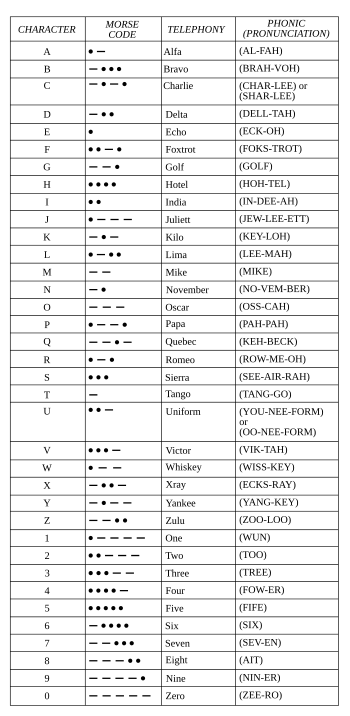
We learned about pre-flight procedures, the quality controls aircraft fueling stations have to go through on a daily basis in order to maintain water and gunga-free fuel, as well as and airport visual communicators today.

Like anything else, proper communication seems to be the best way to keep bad things from happening. So we learned about runway incursions and how to prevent them.

A runway incursion is what happens when an aircraft crosses or otherwise interferes with the space of an active runway.

Things like this happen when people aren't paying attention:

Incursions involving larger craft are, of course, much worse. Everything at an airport moves, and lots of it occupies the same space at one time or another, so keeping everything organized and under control is literally a matter of life and death.


We learned all of this in preparation for taxiing exercises, which we are supposed to start tomorrow.

I now know what all of the lines, colors, and signs you always see at an airport mean, as well as the kind of conversations that Air Traffic Controllers have with pilots.
You're on Runway 27. Taxyway Bravo is thataway.


Tomorrow we take a test over fuels, flight line safety, and a handful of other stuff I'm sure I won't have any problem remembering.

I finally have a reason to know this, and I get to say "niner" on the radio. Pretty neat.


Also, I'm tired.

Thursday, August 25, 2011

Day 4

We learned about Foreign Object Debris (and/or Damage), and Foreign Object Elimination today. FOD can apparently really ruin your day.

In addition to FOD and FOE, we discussed some basic ground operations, and types of fires and fire extinguishers,  jacking and hoisting aircraft and tiedown procedures for both fixed and rotary wing aircraft.

We spoke very briefly about taxiing procedures, and hand signals, which I'll be memorizing this weekend in preparation for a taxiing exercise we will be doing later in the month.

I believe this means "Time for Tacos"


I can't believe I'm going to get to start and taxi an aircraft. I get giddy thinking about it. It's like telling a dog it's time for a walk.


On a significantly more sobering note, today I saw pictures of a corpse.

This body used to be a man, but hist head got into the rotor plane of a helicopter.

The photographs were extremely graphic. So graphic I wondered if they could possibly be real. I was assured that they were.

That really drove home some of the dangers associated with this profession.

We also learned about birdstrikes, which, though dangerous, I find amusing.
When a dog gets run over, that sucks. I feel sorry for the dog.  The dog could only really go one of 4 directions.

But the bird has the advantage of being able to go up or down. I don't feel sorry for the bird. You've got all of everything to be flying around in, and you can't avoid the aircraft coming your way? Please.

Seriously.


Apparently this happens quite often, and is one of the main reasons AMTs and A&P students will be repairing airframes.

Wednesday, August 24, 2011

Day 3


Today, we got out of the classroom and toured the hangar and some of the other facilities.

We started up an Allison 250 jet engine, just for the fun of it.

We talked about tool control and shadowing our toolboxes (which we haven't been able to bring to school yet)

Foreign Object Elimiation (FOE) is a big deal in the aviation industry. A lose object of any kind, hand tools especially (high density = heavy and usually pointy) can cause major damage in an airframe, let alone the powerplant of an aircraft.  You don't want to leave a socket in the wing or empennage of any craft. Death could be the result.

In order for one to keep all of one's tools accounted for, tool box shadowing is employed.

There are two ways to do this, the cheap way, and the expensive way. The expensive way entails buying products specifically intended for this.
The cheap way (DIY style, of course) involves re-purposing other materials, specifically any type of closed-cell foam or home insulation.

A quick google search yeilds all kinds of interesting forum discussions, but cheap backpacking pads from Wal-Mart, and sheets of home insulation from big-box hardware stores seem to be the two most popular DIY box shadowing materials.

Thread links:
http://www.myaandplicense.com/shadow-your-tool-box-for-cheap/
http://www.garagejournal.com/forum/showthread.php?t=25958
http://www.hotrodders.com/forum/toolbox-shadow-foam-132460.html
http://www.garagejournal.com/forum/showthread.php?t=86535

Tool porn:


Tuesday, August 23, 2011

Day 1

22 August 2011

It takes me 30 minutes from my door to the door of the classroom with 6:30AM traffic.
NPR says Kadaffi isn't going to last long.

I got to class early, so I sat in the parking lot and drank coffee.
Quiet morning. Still. Calm. Optimistic.  Unsure. Curious.
Determined?
All is quiet in the classroom now. Humans are strange. This type is, anyway... Homo 'Merikanus.

Start smoking again? No. Just shut up and drink your coffee.

The instructor walks in and writes "Ground Operations" on the whiteboard with a faded green marker.
We all open our notebooks. Skulls full of mush. Monkeys ready to be launched into space.

First we talk about the program and how long it has been around. Then we are given interview forms to fill out for another person in the class. We then introduce them. I've seen this ice-breaker technique used before, but it seemed to work pretty well with this group.

I learn that I need to work on my penmanship because I'll have to fill out lots of paperwork.

We talk about the tool list and take a tour of the facility. We discuss books, career options as an AMT, and we spend a lot of time talking about safety. We discuss the particulars of safety when it comes to individual shop machines, and then we take a safety test. 

I learn that licensure costs not only the expense of the course, but exam expenses as well:
General, Airframe and Powerplant written tests all cost $150 apiece.
The O&P (practicals) for each of those three cost around $150 apiece.

$900 just to take the test. Mark that up to things I didn't know.